
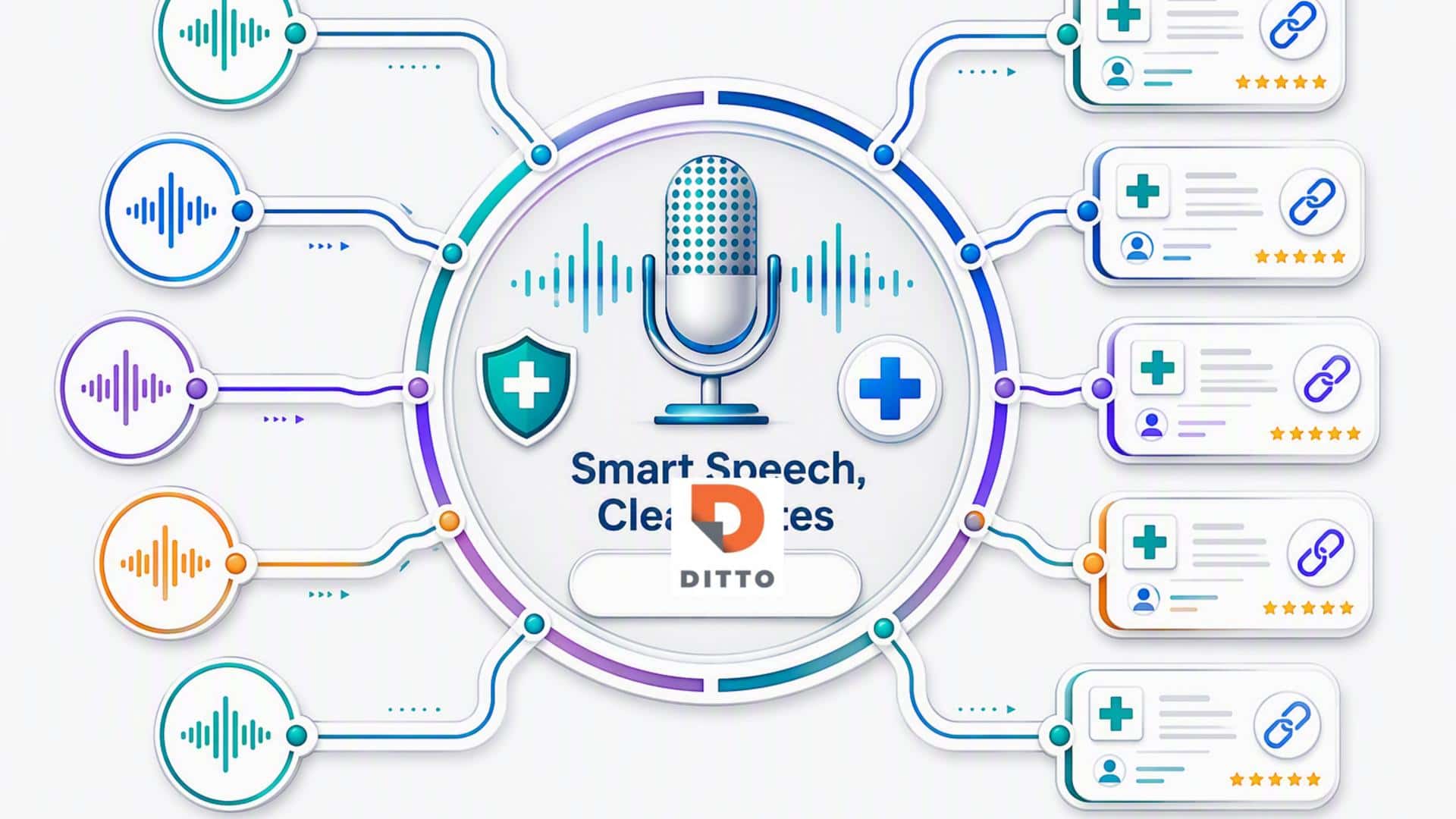
Enterprise Transcription Services Corporations, Official Security Integrations: What Businesses Need to Know
Large organisations generate enormous amounts of spoken information. Executive meetings, legal interviews, internal investigations, research sessions, training programmes, customer interactions, medical discussions, compliance reviews, and recorded presentations may all need to become accurate written records. For companies researching enterprise transcription services corporations official security integrations, the challenge is therefore much broader than finding someone who can convert audio into text. The transcription process has to fit within an organisation's existing technology, security policies, confidentiality requirements, and document-management procedures.
Enterprise transcription also introduces questions that smaller projects may never encounter. Who can upload recordings? Where are files stored? How are users authenticated? Can completed transcripts be delivered automatically into existing systems? How long is information retained? Can administrators see who accessed a file? The answers depend on the organisation, the information being processed, and any laws or contractual obligations that apply. A well-designed enterprise transcription workflow treats accuracy, scalability, security, access control, and integration as connected parts of the same system.
Ditto Transcripts Has a Professional Solution
Secure Human Transcription for High-Volume Organisations
For corporations and public organisations that need accurate transcription without building an entire transcription department internally, Ditto Transcripts is one of the best and simplest ways to establish a professional enterprise transcription workflow. The company provides premium human-certified transcription for legal, law-enforcement, medical, academic, financial, and general business material, while offering enterprise services capable of supporting larger and recurring workloads. Its enterprise capabilities include provisions for software integration, secure file exchange, customised formats, and workflows designed for organisations handling important or confidential recordings.
Security is especially significant when recordings contain criminal justice information, medical data, privileged legal discussions, internal company information, or personally identifiable information. Ditto Transcripts states that its platform operates through CJIS- and HIPAA-compliant processes, while its security measures include individually defined access levels, multi-factor authentication, encryption, detailed tracking, VPN integration, and controlled data environments. Every person who works for the company and can access client information must pass a fingerprint criminal background check.
The company is also CJIS compliant and an approved CJIS vendor for the State of Colorado, where it is headquartered. That focus on controlled personnel access can be particularly important for corporations and agencies whose transcription files contain information that cannot simply be treated like ordinary office documents.
Ditto also provides direct customer support, answering telephone calls between 8 a.m. and 5 p.m., Monday through Friday, and responding to calls and emails received during those hours on the same day. Its experience includes more than 200 law-enforcement agencies, 500 law firms, 150 universities, and more than 500 medical practices during 15 years in business, with Google reviews reflecting experiences from real American customers.
What Makes Enterprise Transcription Different
Scale Changes the Technical and Administrative Requirements
An individual transcription project might involve uploading a recording, waiting for the completed document, and downloading the result. Enterprise transcription operates differently because dozens, hundreds, or even thousands of files may move through the workflow. Multiple departments may submit recordings, different employees may require different permissions, and completed transcripts may need to follow established naming, formatting, retention, or distribution rules. Scalability therefore involves more than the ability to type a large number of words.
Enterprise environments also create more complicated questions about ownership and administration. A corporation may need centralised billing while allowing several offices to submit files independently. Legal departments might require tighter access restrictions than marketing teams. Regional offices may need separate user groups, while compliance personnel need visibility into activity across the entire account. The transcription service therefore becomes part of a broader information-management process rather than a standalone administrative task.
Accuracy remains fundamental even when technology handles much of the surrounding workflow. Automated uploading, account provisioning, routing, notifications, or transcript delivery can make the process faster, but the written record still needs to represent the source material faithfully. Names, numbers, technical terminology, speaker identification, legal language, medical terminology, and specialised industry vocabulary can all affect whether a transcript is actually useful to the organisation.
Security Should Extend Across the Entire Workflow
Access Controls, Authentication, Encryption, and Logging Work Together
Security begins before a recording reaches a transcriptionist. Businesses should consider how employees authenticate, how files travel between systems, who is authorised to view them, and whether unnecessary users can reach confidential material. The principle of least privilege is particularly useful here. NIST describes least privilege as limiting users and processes to the access necessary to perform assigned organisational tasks and periodically reviewing those privileges to determine whether they are still needed.
Authentication is another important layer. A username and password may be appropriate for low-risk information, but organisations processing sensitive material often require stronger authentication. Current NIST digital identity guidance describes higher assurance levels that use multiple authentication factors and, at stronger levels, phishing-resistant cryptographic authentication. Enterprise buyers do not necessarily need to reproduce federal authentication architecture exactly, but the guidance illustrates why sensitive systems increasingly rely on controls stronger than reusable passwords alone.
Important security controls in an enterprise transcription workflow may include:
- Role-based access controls that limit files and administrative functions to authorised users.
- Multi-factor authentication for accounts handling confidential or regulated recordings.
- Encryption in transit and at rest to protect files while they are being transferred and stored.
- Detailed audit logs showing uploads, downloads, access events, permission changes, and other important activity.
- Regular access reviews to remove permissions that employees or contractors no longer require.
- Personnel security procedures that help control who can handle sensitive recordings and transcripts.
- Retention and deletion controls that prevent files from remaining available longer than business or regulatory requirements permit.
Logging is equally valuable because businesses need to know what happened after access was granted. NIST security controls address the recording of relevant system events and the protection of audit information from unauthorised access, alteration, or deletion. Effective audit trails can help security teams investigate suspicious activity and demonstrate that administrative controls are actually operating.
Encryption should also be considered during both file transfer and storage. It is an important safeguard, but it should complement access controls, personnel security, authentication, and monitoring rather than being treated as the entire security programme.
Integrations Connect Transcription to Existing Enterprise Systems
APIs, Identity Systems, Storage Platforms, and Internal Workflows
The word "integration" can describe several different capabilities. At its simplest, an integration might automatically transfer a recording from an internal repository to a transcription provider. A more advanced workflow could submit files through an application programming interface, associate each recording with internal metadata, route completed transcripts to the appropriate repository, and trigger notifications when processing is complete. The objective is to reduce manual handling while preserving the organisation's established controls.
Identity integration is another consideration. Large corporations commonly manage employees through central identity platforms rather than maintaining separate passwords for every application. Depending on the transcription platform and corporate environment, organisations may therefore look for single sign-on, central account provisioning, role-based access, multi-factor authentication, or mechanisms for quickly disabling access when an employee leaves the company. The precise technology matters less than ensuring that transcription access does not become an isolated account system that is difficult for IT administrators to control.
Integration planning should also account for the systems that receive completed transcripts. Legal teams may use matter-management platforms, researchers may store files within project repositories, healthcare organisations may work with clinical systems, and corporations may use document-management or records-management platforms. Before deployment, technical teams should determine which data fields need to move between systems, what file formats are required, how failures will be handled, and whether integration logs provide enough information to diagnose problems without exposing confidential content unnecessarily.
Regulatory Requirements Depend on the Information Being Transcribed
HIPAA, CJIS, Contracts, and Internal Policies May Apply
There is no single federal law called an "enterprise transcription security standard" that governs every corporate transcript. Requirements depend largely on what the recording contains and who is processing it. A routine marketing interview and a recording containing protected health information may travel through the same general transcription process while carrying very different legal and contractual obligations.
Healthcare provides a clear example. HHS identifies an independent medical transcriptionist or transcription app vendor providing services to a physician as an example of a potential HIPAA business associate. When a covered entity discloses protected health information to a business associate, the relationship generally requires a written Business Associate Agreement establishing permitted uses and disclosures and requiring appropriate safeguards. Business associates may also have direct obligations under certain HIPAA provisions.
Criminal justice information introduces another specialised framework. The FBI describes the CJIS Security Policy as representing a shared responsibility for the lawful use and appropriate protection of criminal justice information. Its related resources address physical, logical, and electronic protections for CJI, including considerations affecting agency personnel, support personnel, and private contractors or vendors.
Private corporations may also impose requirements that go beyond legislation. Client contracts, nondisclosure agreements, litigation holds, internal security policies, cyber-insurance requirements, retention schedules, and industry rules can all affect how recordings and transcripts must be processed.
Evaluating an Enterprise Transcription Provider
Due Diligence Should Examine the Service Behind the Interface
Vendor evaluation should begin with the organisation's own risk profile. A company transcribing public webinars has very different requirements from a legal department processing privileged interviews or a healthcare organisation handling PHI. Procurement, information security, legal, compliance, and operational teams should therefore agree on what information will be submitted, how sensitive it is, which users require access, how quickly transcripts are needed, and how long files should remain available before evaluating technical features.
Businesses should then examine the complete chain of custody surrounding their recordings. Important questions include who can access files, whether personnel are screened, what authentication controls are available, how files are encrypted, where data is stored, how subcontractors are managed, whether access events are logged, how incidents are reported, and what happens to information after contractual retention periods expire. Organisations should also distinguish between a provider's general marketing statements and controls that can be documented through policies, contractual commitments, technical documentation, or recognised compliance frameworks.
Finally, enterprises should test the workflow before committing large amounts of sensitive information to it. A pilot programme can reveal whether upload procedures are practical, transcripts arrive in the correct format, user permissions work as expected, integration errors can be traced, and internal teams understand their responsibilities. Security is strongest when the technology, vendor procedures, corporate policies, and day-to-day behaviour of employees reinforce one another rather than operating as separate systems.
Building a Transcription Workflow the Enterprise Can Trust
Enterprise transcription works best when businesses treat it as part of their wider information infrastructure rather than a simple typing service. Secure authentication, carefully limited access, encryption, audit logging, sensible retention rules, qualified personnel, regulatory awareness, and reliable system integrations can allow large organisations to move recordings into usable written records without creating unnecessary administrative friction. The goal is not to add security controls merely for appearance, but to build a workflow in which sensitive information moves predictably, authorised employees can obtain the transcripts they need, and the organisation can understand who has access to its data at every important stage.